Synthesizing Manganese Diboride: A New Frontier in High-Energy Materials for Rocket Fuel and Beyond
In the ongoing pursuit of advanced materials that can power the future of aerospace, energy, and sustainable technologies, researchers are breaking new ground with the synthesis of manganese diboride (MnB2). A team of chemists at the University at Albany, SUNY has successfully produced this long-hypothesized compound, revealing its extraordinary potential as a next-generation high-energy material. Their study, recently published in the Journal of the American Chemical Society, demonstrates that manganese diboride could outperform conventional fuels and find uses across multiple industries. (Original article link)
A Rocket Fuel Revolution
The most exciting application of manganese diboride lies in its role as a solid rocket fuel additive. The compound is more than 20% more energetic by weight and 150% more energetic by volume compared to aluminum, which is currently the industry standard in solid rocket boosters. In practical terms, this means that rockets could use less fuel to achieve the same thrust, freeing up precious storage space for additional payloads or scientific instruments.
Unlike other highly energetic materials that can be dangerously unstable, manganese diboride only combusts when paired with an ignition agent like kerosene. This combination of high performance and inherent safety makes it a promising candidate for real-world aerospace applications.
The Science Behind the Energy
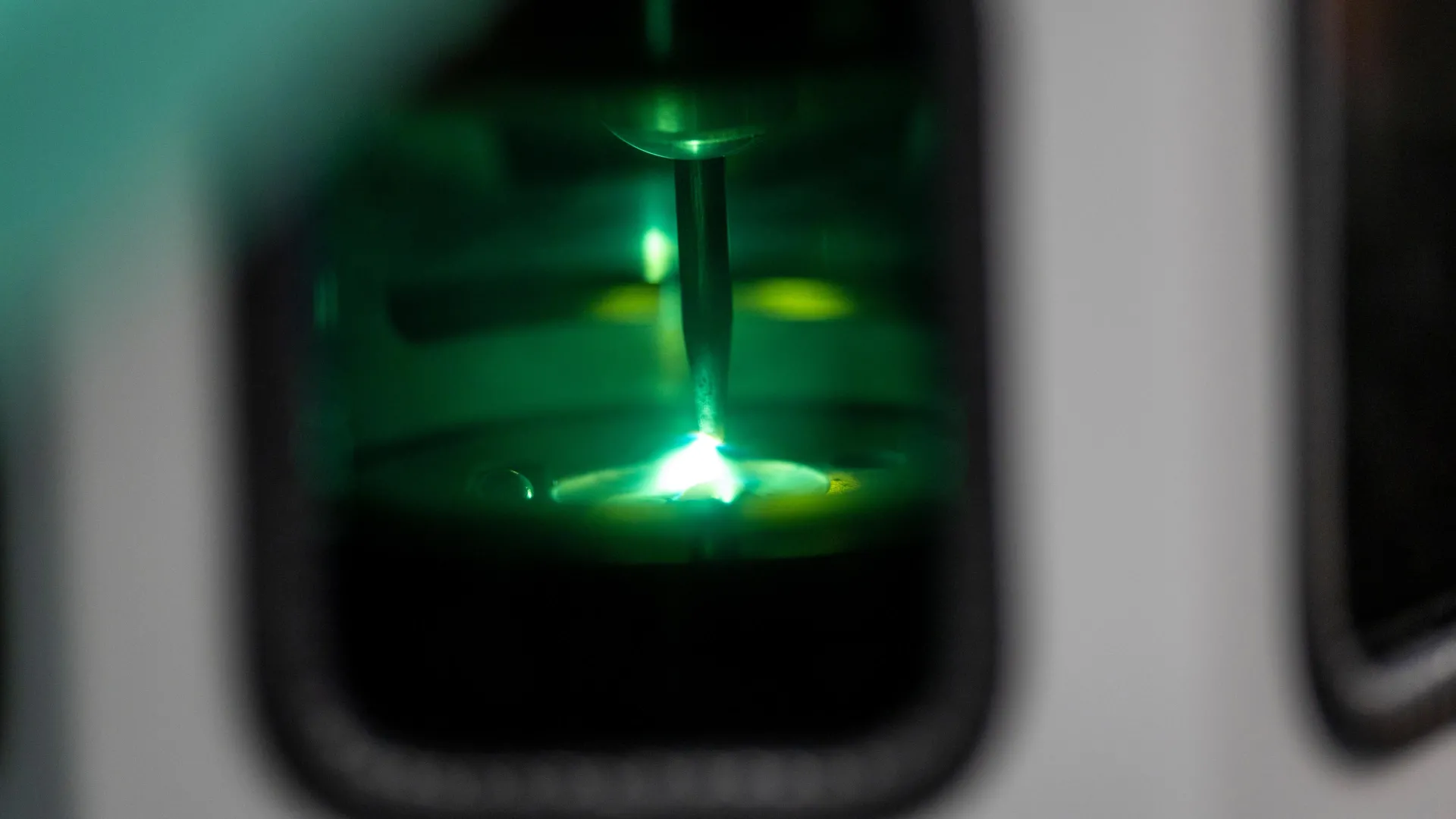
To synthesize manganese diboride, the researchers used an arc melter, heating pressed pellets of manganese and boron powders to over 3,000°C (5,400°F). The resulting molten material was rapidly cooled, locking in a tightly packed, metastable atomic structure. At the atomic level, the central manganese atom bonds to more atoms than typical, creating a compressed arrangement likened to a “coiled spring” ready to release energy upon ignition.
Computational models revealed subtle asymmetries, or deformations, in the hexagonal lattice structure of the compound. These skewed shapes store potential energy, much like a stretched trampoline. When triggered, the stored energy is unleashed explosively, accounting for the compound’s exceptional energy density.
Beyond Rocketry: Catalysts and Recycling
While aerospace fuels are the headline-grabbing application, the versatility of boron-based compounds opens additional opportunities. Manganese diboride could contribute to the development of durable catalytic converters for cleaner vehicles, serve as a catalyst in plastic recycling processes, and potentially inform the design of new industrial materials with unusual strength and reactivity.
As Associate Professor Alan Chen of UAlbany notes, boron-based compounds often defy conventional expectations, offering unique physical and chemical behaviors. Manganese diboride is just one piece of a larger quest to discover “harder, stronger, and more extreme” materials for the future.
A New Era of Materials Discovery
The discovery underscores the power of modern experimental tools and computational chemistry. Techniques like high-temperature arc melting, combined with quantum-level simulations, are enabling researchers to bring hypothetical compounds into reality. This synergy between theory and practice is accelerating breakthroughs not only in aerospace but also in sustainable chemistry and advanced materials engineering.
With its unique combination of high energy density, safety, and versatility, manganese diboride represents a new frontier for materials science. From space exploration to environmental sustainability, the applications of this discovery could reshape multiple industries in the decades ahead.
Footnote: This blog article was prepared with the assistance of AI technologies.
Sponsored by PWmat (Lonxun Quantum) – pioneering GPU-accelerated simulation software for cutting-edge research in quantum systems, energy technologies, and semiconductors. Learn more about how PWmat empowers materials innovation at: https://www.pwmat.com/en
📘 Download our brochure to explore advanced features, applications, and success stories from leading research institutions: PWmat PDF Brochure
🎁 Interested in trying PWmat? Request a free trial and receive tailored information for your R&D projects: Request Free Trial

📞 Phone: +86 400-618-6006
📧 Email: support@pwmat.com
Citation: University at Albany. "Synthesizing manganese diboride: New high-energy compound could revolutionize rocket fuel and materials science." (2025, September 29). Retrieved October 3, 2025 from ScienceDaily
#ManganeseDiboride #RocketFuel #HighEnergyMaterials #MaterialsScience #SpaceExploration #BoronCompounds #QuantumServerNetworks #SustainableChemistry #AdvancedMaterials #Catalysis #PlasticsRecycling


Comments
Post a Comment