Materials Science Breakthroughs: The “Try, Try Again” Model Driving Circular Innovation
Scientific and technological progress often makes headlines through major breakthroughs, but the reality is that each “aha” moment is preceded by countless “oh no’s.” Nowhere is this clearer than in the world of materials science and circular economy innovation, where incremental advances, failed experiments, and deep collaborations quietly shape the future of sustainable systems.
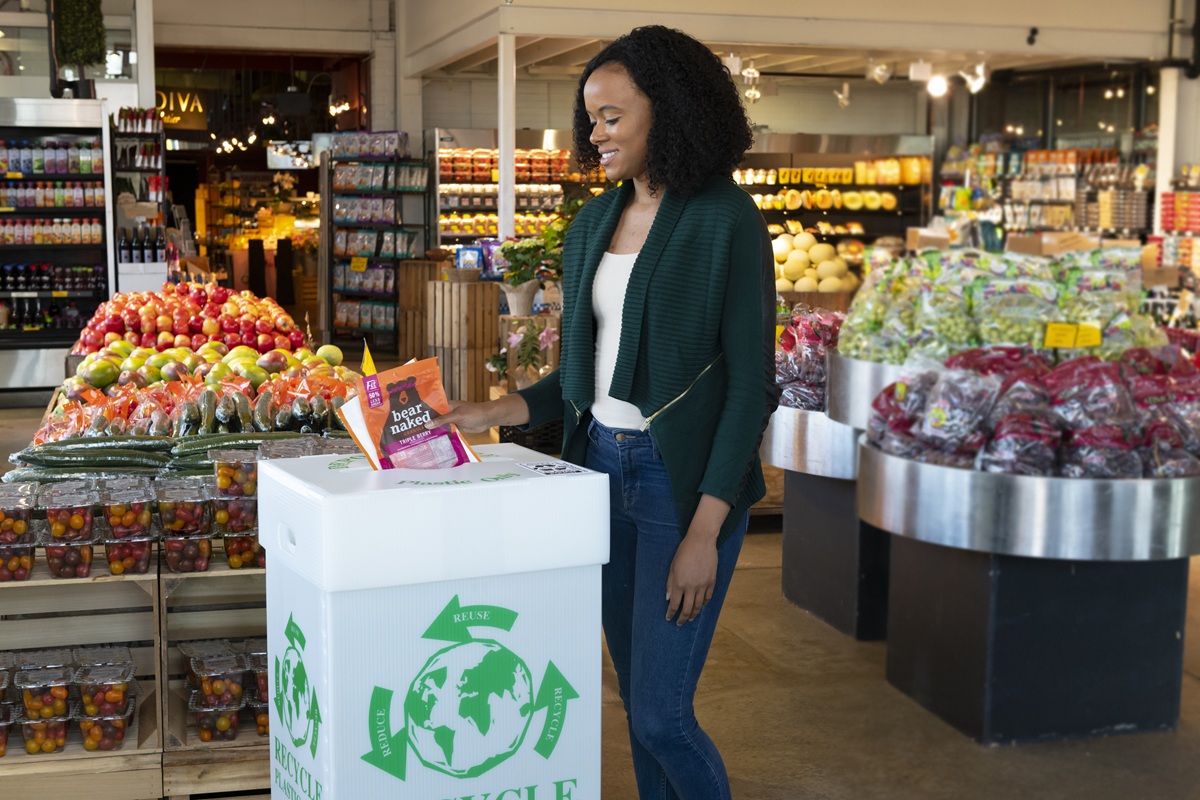
A recent article from Sustainable Brands highlights how companies like Dow and research partners such as the Iowa State Polymer and Food Protection Consortium are investing in long-term R&D to address persistent recycling challenges. Their work on food packaging residue and recycling systems exemplifies the “try, try again” approach that underpins real-world innovation.
Why Incremental Progress Matters in Materials Innovation
The journey toward more sustainable materials isn’t defined by a single discovery—it’s built from thousands of experiments that map out what works and what doesn’t. For example, food packaging systems face practical issues with residue contamination (crumbs, oils, sugars, cheese, etc.) that affect sorting, processing, and recycling. These everyday obstacles drive researchers to test new methods, collaborate across sectors, and refine systems step by step.
Dow and its partners use a systems thinking approach to understand how packaging design, material properties, recycling processes, and consumer behavior interact. More than 90% of Dow’s R&D pipeline is aligned with sustainability outcomes, focusing on circular packaging systems that can be collected, sorted, and processed effectively within existing infrastructures.
Testing the Limits: Dry vs. Wet Recycling
One illustrative example comes from a study at Iowa State University, co-sponsored by Dow and the Association of Plastic Recyclers. The study investigated whether a dry recycling process—one that skips the washing step—could handle certain types of food packaging, potentially saving time, water, and money.
The results were clear: even packaging with relatively low residue levels, such as snack puffs, sugar bags, and crackers, proved problematic. Sugar caramelized under heat, residues clogged equipment, and only sliced cheese packaging performed acceptably. For now, wet washing remains essential for most flexible food packaging. While the results may sound disappointing, they provide valuable data that helps recyclers and designers focus their efforts on viable solutions.
From “What Doesn’t Work” to Smarter Innovation
Understanding failure is just as critical as celebrating success. By systematically identifying what doesn’t work, researchers and industry stakeholders can sharpen their focus, avoid wasteful investments, and accelerate progress toward circularity. As Dave Parrillo, Vice President for R&D at Dow Packaging & Specialty Plastics, notes: “Knowing what doesn’t work closes off unproductive paths and sharpens the focus on discovering what does.”
For business leaders, the implications are broader than plastics alone. The study illustrates three key principles for managing innovation:
- Incremental insights matter — even negative results save time and resources by ruling out dead ends.
- Systems thinking is essential — complex challenges require understanding interconnected technologies, markets, and behaviors.
- Collaboration accelerates learning — breakthroughs arise when companies, universities, and associations share data and perspectives.
Building a Circular Future, One Step at a Time
The study reinforces that small, well-documented steps form the backbone of big change. Whether it’s improving food packaging recyclability, developing new bio-based polymers, or designing circular business models, each experiment—successful or not—adds to a growing body of knowledge that shapes sustainable innovation.
As Dow’s Parrillo puts it: “If we want to scale a circular economy, we have to value the experiments that don’t grab headlines just as much as the ones that do.” It’s this steady, persistent approach that drives materials science breakthroughs and the transition to a sustainable future.
Original article: Materials Science Breakthroughs: The “Try, Try Again” Model (Sustainable Brands, October 2025) .
This blog article for Quantum Server Networks was prepared with the help of AI technologies.
Sponsored by PWmat (Lonxun Quantum) – a leading developer of GPU-accelerated materials simulation software for cutting-edge quantum, energy, and semiconductor research. Learn more about our solutions at: https://www.pwmat.com/en
📘 Download our latest company brochure to explore our software features, capabilities, and success stories: PWmat PDF Brochure
🎁 Interested in trying our software? Fill out our quick online form to request a free trial and receive additional information tailored to your R&D needs: Request a Free Trial and Info

📞 Phone: +86 400-618-6006
📧 Email: support@pwmat.com
#MaterialsScience #CircularEconomy #RecyclingInnovation #SustainablePackaging #FoodPackaging #SystemsThinking #AIinScience #DowResearch #InnovationEcosystems #QuantumServerNetworks #SustainableInnovation


Comments
Post a Comment