From Waste to Wonder: How Pumice and Tire Rubber Are Revolutionizing Geopolymer Concrete
Published on Quantum Server Networks – October 2025
As the global construction industry moves toward carbon neutrality, researchers are constantly searching for ways to replace traditional cement with greener, more sustainable alternatives. A new study published in Scientific Reports explores one of the most promising innovations yet: blending waste tire rubber and pumice into geopolymer concrete (GPC) to create a material that is not only lightweight and impact-resistant but also environmentally friendly.
The research, titled “Mechanical and impact behavior of lightweight geopolymer concrete produced by pumice and waste rubber”, offers a detailed investigation into how combining these two unconventional materials could lead to the next generation of eco-efficient building composites. The full article is available on AZoBuild (link here).
Reimagining Waste as a Building Resource
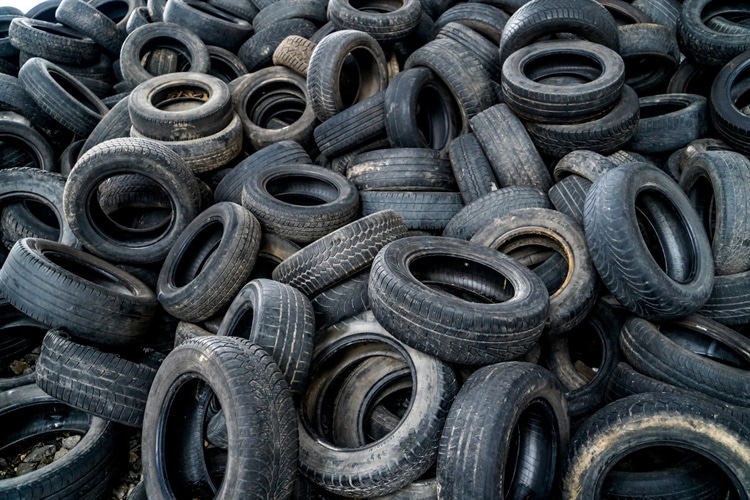
Each year, over one billion waste tires are discarded globally, posing serious environmental challenges. At the same time, the extraction and use of natural aggregates in concrete production contribute to carbon emissions and ecosystem degradation. The idea of using shredded tire rubber and volcanic pumice to replace part of the aggregate in concrete therefore represents a powerful shift toward circular, low-carbon construction materials.
Geopolymer concrete (GPC)—a cement-free alternative that relies on industrial byproducts like fly ash and slag—already emits up to 80% less CO₂ than traditional Portland cement. When enhanced with pumice and rubber, GPC not only becomes lighter but also absorbs impact energy, making it ideal for structures exposed to dynamic loads or seismic activity.
Inside the Study
Researchers developed 12 different GPC mixtures by replacing natural coarse aggregates with pumice (0–15% by weight) and waste tire rubber (0–15% by volume). In total, 144 specimens were tested for compressive strength (CS), splitting tensile strength (STS), flexural strength (FS), and impact resistance through drop-weight tests.
The mixes were activated using a combination of sodium silicate and sodium hydroxide solutions, with curing at 85°C for 24 hours to accelerate the geopolymerization process. This ensured that the fly-ash-based binder developed the necessary microstructure to maintain integrity even with lightweight, porous aggregates.
Key Findings
- Strength optimization: Higher pumice or rubber content generally reduced compressive and tensile strength, but the combination of 5% pumice and 10% rubber achieved the best balance of performance and sustainability.
- Impact resistance: The optimized mix demonstrated a peak impact force of around 41 kN — a significant improvement in energy absorption and crack resistance.
- Density and workability: The dual use of pumice and rubber reduced unit weight, producing a lightweight concrete ideal for prefabricated or modular construction. However, workability decreased as pumice content increased.
- Thermal stability: Thermogravimetric analysis (TGA) revealed less than 6% mass loss up to 1000°C, confirming that the geopolymer matrix maintains strong thermal resistance.
The inclusion of rubber provided improved ductility and flexibility, preventing catastrophic failure during impact. Pumice, meanwhile, contributed to weight reduction and better insulation, though its porous nature required optimization to maintain structural strength.
Why It Matters
The combination of waste tire rubber and pumice could revolutionize sustainable construction. The use of recycled and naturally abundant materials reduces environmental impact on multiple fronts: less landfill waste, lower CO₂ emissions, and reduced demand for virgin aggregates. This research supports the transition toward a circular construction economy—one that treats waste as a valuable raw material.
Such geopolymer composites are especially promising for non-load-bearing structures, architectural panels, paving tiles, and seismic-resistant walls, where impact energy absorption and lightweight performance are crucial. The findings also provide a blueprint for optimizing mix ratios in future GPC research and real-world applications.
Beyond the Lab: The Future of Geopolymer Innovation
This study is part of a growing movement to move away from cement and toward materials that leverage industrial and environmental byproducts. Current advancements are also exploring the use of AI-driven mix design algorithms and molecular simulations to predict optimal ratios of activators, aggregates, and curing conditions — a frontier where computation meets construction science.
As cities aim to achieve net-zero emissions by 2050, lightweight, impact-resistant, and waste-based concretes like these will play a vital role in reshaping infrastructure for resilience and sustainability.
Original article: “Mechanical and impact behavior of lightweight geopolymer concrete produced by pumice and waste rubber,” AZoBuild (2025). Published in Scientific Reports.
This blog article for Quantum Server Networks was prepared with the help of AI technologies to assist in research synthesis and writing.
Sponsored by PWmat (Lonxun Quantum) – a leader in GPU-accelerated materials simulation software empowering researchers in quantum, energy, and semiconductor fields. Discover more at https://www.pwmat.com/en.
📘 Explore PWmat’s advanced DFT and MD simulation capabilities: Download Company Brochure .
🎁 Request a free trial and customized consultation: Try PWmat Now .

📞 +86 400-618-6006
📧 support@pwmat.com
🌐 Connect with us:


#geopolymerconcrete #materialsScience #greenbuilding #sustainability #circularconstruction #recycledmaterials #tireRecycling #pumice #lowcarbonconcrete #civilengineering #QuantumServerNetworks #ScientificReports #constructioninnovation


Comments
Post a Comment