Photocatalysis Breakthrough: Converting CO₂ into Ethylene with 99% Selectivity
Published on Quantum Server Networks – September 2025
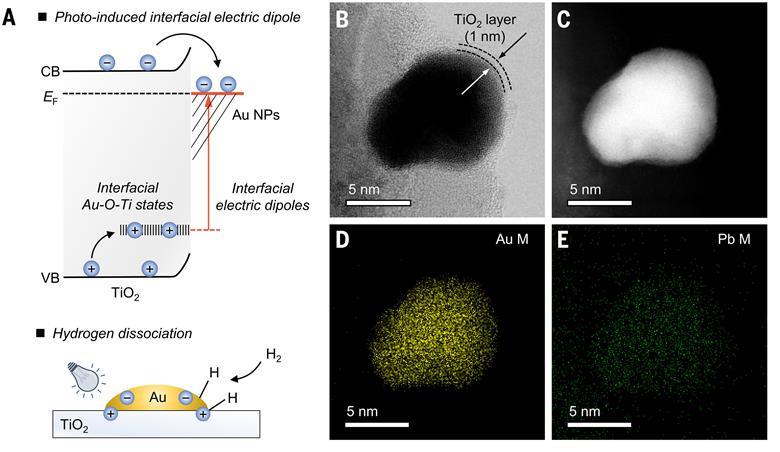
A new study from researchers at the Dalian National Laboratory for Clean Energy in China has demonstrated a groundbreaking photocatalytic process that can convert carbon dioxide (CO₂) into ethylene with 99% selectivity. Published in Science, this work introduces a potentially scalable and sustainable route to producing one of the world’s most important industrial chemicals while helping to close the carbon cycle.
Why Ethylene Matters
Ethylene is among the most widely used chemical feedstocks, serving as a building block for plastics, textiles, solvents, and agricultural products. Traditionally, it is derived from petroleum-based processes such as steam cracking—methods that are highly energy-intensive and contribute significantly to greenhouse gas emissions. A green, photocatalytic alternative for ethylene production could dramatically reduce the carbon footprint of global manufacturing.
How the Process Works
The team, led by Nengchao Luo, engineered a catalyst composed of gold nanoparticles supported on titanium dioxide (TiO₂). When irradiated with near-ultraviolet light, electronic interactions at the gold–titanium interface dissociate hydrogen molecules into highly reactive fragments. These species then reduce CO₂ into ethane. In a tandem flow reactor, the ethane is further dehydrogenated by a second photocatalyst into ethylene with 99% yield and selectivity.
The innovation lies in the photo-induced interfacial electric dipoles that form at the gold–TiO₂ junction. These dipoles enhance hydrogen splitting and ensure precise reaction pathways, enabling nearly perfect selectivity for ethylene—a level of control rarely seen in catalytic chemistry.
Durability and Industrial Potential
One of the most impressive aspects of this system is its durability. The catalyst sustained activity for over 1500 hours under flow chemistry conditions without performance loss. The flow reactor configuration not only boosts durability but also aligns with industrial-scale processing methods already in use.
“It’s estimated that 25% of all chemical processes include at least one hydrogenation step. This breakthrough could become relevant for any hydrogenation reaction,” said Luo.
Challenges and Future Directions
Despite its promise, the system is not without challenges. High-energy UV light sources currently have poor electrical-to-light conversion efficiency, and the reliance on gold increases costs. Experts note that future research may focus on replacing noble metals with earth-abundant alternatives such as titanium nitride, while maintaining efficiency.
Still, the current design uses only about 1% gold by weight, with performance improving as catalyst particle sizes shrink. Combined with its extraordinary selectivity and long lifetime, the system represents a significant step toward economically viable and sustainable photocatalysis.
A Greener Industrial Future
This work highlights how advanced materials and photochemistry can reimagine processes that have been industrial mainstays for over a century. By turning a waste gas into a valuable commodity with almost perfect efficiency, this innovation opens the door to a future where carbon capture and utilization are not just environmental necessities but also economic opportunities.
This article for Quantum Server Networks was prepared with the assistance of AI technologies to enhance readability, research integration, and SEO optimization.
Sponsored by PWmat (Lonxun Quantum) – a pioneer in GPU-accelerated materials simulation software, empowering breakthroughs in quantum materials, clean energy, and semiconductor research. Learn more at: https://www.pwmat.com/en
📘 Explore our latest company brochure for detailed insights into simulation capabilities and customer success stories: PWmat PDF Brochure
🎁 Free Trial Available: Researchers and companies can request a complimentary trial tailored to their R&D needs: Request a Free Trial

📞 Phone: +86 400-618-6006
📧 Email: support@pwmat.com
🔑 Hashtags: #Photocatalysis #CO2Conversion #CleanEnergy #SustainableChemistry #MaterialsScience #Nanotechnology #Ethylene #Catalysis #QuantumServerNetworks #GreenInnovation


Comments
Post a Comment