Shape Memory Polymers with Nanotips: Revolutionizing Switchable Dry Adhesion
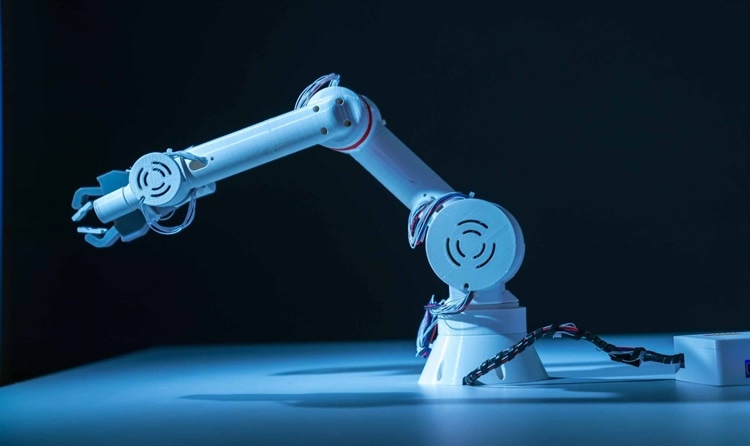
A breakthrough study published in Nature Communications has introduced a new class of shape memory polymer (SMP) surfaces embedded with nanotips. These innovative materials exhibit tunable nanoscale roughness, enabling them to switch between strong adhesion and easy release across multiple scales. This advancement is set to transform fields ranging from robotics to microelectronics and biomedical applications. Read the original article here.
The Need for Smart Adhesion
Traditional adhesives often lack versatility: they either stick too strongly or not enough, and rarely adapt to varying conditions. The demand for materials that can actively modulate their adhesive properties is growing, especially in robotics, wearable tech, and healthcare. SMP surfaces with nanotips address these challenges by offering reversible, thermally controlled adhesion.
Engineering the Nanotips
Researchers began by etching nanoscale pyramid tips on silicon wafers using anisotropic wet etching in potassium hydroxide (KOH). These molds were then used to replicate the nanotip structures onto SMP surfaces via casting processes. The resulting textured surfaces had an RMS roughness of ~200 nm—a crucial factor for controlling adhesion.
In their glassy state, the SMPs were rigid, allowing the nanotips to flatten under pressure and create a larger contact area (high adhesion). Upon heating above their glass transition temperature (Tg), the SMPs softened, restoring their roughness and drastically reducing contact area (low adhesion).
Adhesion Performance and Versatility
Experimental tests demonstrated a more than 1000-fold difference in adhesion between the soft and stiff states. The surfaces maintained their performance across over 20 thermal cycles without wear. Impressively, the SMPs performed well on diverse materials such as glass, acrylic, silicon wafers, wood, and even wet fabrics.
Applications range from handling delicate 5 μm silicon microplatelets and 200 nm silicon nitride inks in microelectronics to enabling precise pick-and-place operations with six-axis robotic arms.
Transformative Applications
By integrating the SMP surfaces with robotic systems, researchers demonstrated efficient and programmable adhesion switching during tasks such as transferring microLED chips for flexible displays. In the medical field, these materials could improve drug delivery patches that adhere securely during use yet release painlessly.
This innovation opens doors for scalable manufacturing of wearable devices, flexible electronics, and soft automation tools, addressing limitations of conventional adhesives and paving the way for next-generation smart materials.
Read the full article on AZoNano.
Sponsored by PWmat (Lonxun Quantum) – a leading developer of GPU-accelerated materials simulation software for cutting-edge quantum, energy, and semiconductor research. Learn more about our solutions at: https://www.pwmat.com/en
📘 Download our latest company brochure to explore our software features, capabilities, and success stories: PWmat PDF Brochure

📞 Phone: +86 400-618-6006
📧 Email: support@pwmat.com
#ShapeMemoryPolymers #SmartMaterials #Nanotechnology #Robotics #FlexibleElectronics #QuantumServerNetworks


Comments
Post a Comment