Unraveling the Secret Fluid Mechanics of Our Tissues: A New Role for Intercellular Water
Water is life — and in the human body, it’s also movement, healing, and resilience. New research from MIT engineers published in Nature Physics reveals a hidden mechanical role played by water in our tissues. Their study shows that the fluid between cells — known as intercellular or interstitial water — plays a critical part in determining how soft tissues respond to deformation like pressing, squeezing, or stretching.
How Fluids Shape Tissues
More than half of the water in our bodies exists between cells. Until now, its physical role was largely overlooked in the context of tissue mechanics. The MIT team, led by Prof. Ming Guo and postdoctoral fellow Fan Liu, demonstrated that the ease with which this intercellular water flows has a measurable impact on how soft tissues adapt to mechanical stress.
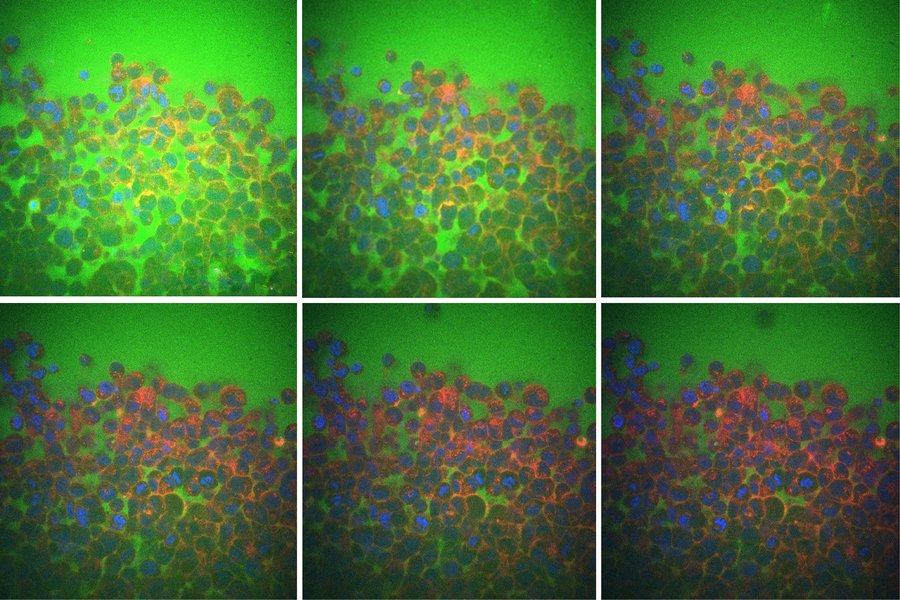
Using clusters of cells derived from pancreatic tissue, the team constructed a precise mechanical testing setup that gently compressed these cellular spheroids while tracking their shape and stress response. They found that the ability of water to flow through the spaces between cells directly controls how quickly and easily a tissue recovers from deformation. Larger clusters took longer to “relax” — a clear sign that internal water movement, not just structural stiffness, matters.
A Paradigm Shift in Tissue Engineering
This research flips the conventional understanding of tissue elasticity on its head. Scientists have long assumed that the stiffness or softness of a tissue was mostly governed by internal cellular structures or the extracellular matrix. However, Guo’s team shows that fluid flow between cells — something akin to seawater sloshing between sand grains — is a dominant mechanical force.
The implications are vast. Understanding and manipulating intercellular fluid flow could improve therapies for diseases like Alzheimer’s, optimize artificial tissue engineering, and even lead to novel methods for enhancing recovery from strokes or sports injuries through “mechanical massages” that stimulate fluid transport.
Beyond Cancer: A Universal Mechanism?
This study builds on earlier MIT research that showed how fluid flow from the core to the periphery of tumors aids in cancer invasion. The same principle now appears to apply to healthy tissues as well. Whether in muscle, brain, or organ tissue, interstitial flow may serve as a key driver of both mechanical and physiological responses — from delivering nutrients to removing waste and adjusting tissue stiffness.
By treating tissues as dynamic, fluid-interfaced systems, biomedical engineers can gain a more complete view of how diseases progress, how aging changes our tissues, and how artificial organs can be made more lifelike.
Looking Forward: Enhancing Healing Through Fluid Flow
According to lead researcher Ming Guo, the study opens doors to using mechanical stimulation to promote beneficial fluid redistribution. “In the future, we can think of designing ways to massage a tissue to allow fluid to transport nutrients between cells,” Guo notes. In neurological conditions like Alzheimer’s, enhancing intercellular flow might help remove damaging waste from brain tissue.
As intercellular water steps into the spotlight, it becomes clear that hydration isn’t just a biochemical necessity — it’s a biomechanical force. From cancer research to regenerative medicine, this insight is poised to transform how we think about — and engineer — the building blocks of life.
🔗 Original article published by MIT News: https://news.mit.edu/2025/mit-engineers-uncover-surprising-reason-why-tissues-are-flexible-rigid-0620
Sponsored by PWmat (Lonxun Quantum) – a leading developer of GPU-accelerated materials simulation software for cutting-edge quantum, energy, and semiconductor research. Learn more about our solutions at: https://www.pwmat.com/en

📞 Phone: +86 400-618-6006
📧 Email: support@pwmat.com


Comments
Post a Comment