Recyclable Circuits: Virginia Tech Unveils Durable, Self-Healing Electronics with Liquid Metal Vitrimers
Published on: Quantum Server Networks – Exploring Smart Materials for a Sustainable Future
In a world increasingly driven by electronic devices, the challenge of e-waste is growing at an alarming rate. According to a 2024 United Nations study, global electronic waste nearly doubled in just 12 years, rising from 34 to 62 billion kilograms—and it's projected to reach 82 billion by 2030. Only a fraction (around 20%) is recycled, leaving valuable materials and components lost to landfills. But what if our devices could be recycled, reconfigured, or repaired without losing performance?
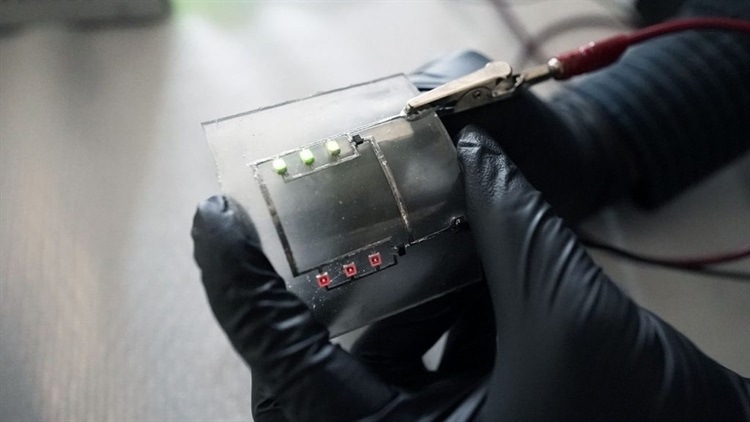
A research breakthrough from Virginia Tech, published in Advanced Materials, proposes just that. A collaborative effort between the university’s Departments of Mechanical Engineering and Chemistry has yielded a novel, fully recyclable electronic material that combines mechanical strength, electrical conductivity, and the ability to self-heal after damage. The secret? A clever blend of vitrimer polymers and liquid metal droplets.
A New Generation of Smart Circuit Materials
Led by Professors Michael Bartlett and Josh Worch, this interdisciplinary research team has developed a new class of circuit materials that promise to revolutionize electronic sustainability. The core of the innovation lies in a dynamic vitrimer-based composite—a type of polymer that can be reshaped and healed under heat—infused with droplets of liquid metal that serve as conductive elements.
Unlike rigid traditional circuit boards made from difficult-to-recycle thermosets, these flexible materials remain resilient even under stress, impact, or deformation. "Our material is unlike conventional electronic composites," explains Bartlett. "Even under mechanical deformation or damage, they still work."
Why This Matters: Toward Circular Electronics
Current circuit boards are made from multilayered permanent materials that require complex, energy-intensive recycling processes. In contrast, the new Virginia Tech circuit can be dismantled with relative ease using alkaline hydrolysis—a chemical process that separates key components without extensive energy input.
This means that not only can the boards be reused and reshaped, but even individual components such as LEDs and liquid metal conductors can be recovered and reintegrated into new devices. The team is also developing a closed-loop recycling system to ensure that all parts of the circuit can be continuously reused.
Liquid Metal: More Than Just a Novelty
The use of liquid metal, specifically in droplet form, introduces significant advantages in conductivity and flexibility. While earlier flexible electronics often compromised on performance or durability, this composite shows that it’s possible to maintain robust electronic functionality even in soft, deformable formats.
The composite maintains conductivity, resilience, and strength similar to that of conventional plastic circuit boards—while remaining fully recyclable. This opens the door to a new generation of electronics that are not just smart and strong, but sustainable by design.
Applications and Impact
Such recyclable and self-healing electronic materials could be a game changer for everything from consumer electronics to wearable devices, medical sensors, and even flexible robotics. The ability to recover valuable materials easily could drastically reduce the environmental footprint of electronic manufacturing and disposal.
Moreover, this development aligns with a growing trend toward circular electronics, where materials are kept in use for as long as possible, minimizing waste and resource consumption.
Conclusion
By combining cutting-edge chemistry and engineering, the Virginia Tech team has created a new path forward for recyclable, reconfigurable, and resilient electronics. Their liquid metal–vitrimer composite represents a major milestone in the quest to design smarter materials for a more sustainable digital future.
To read the original article, visit: AZoM – Recyclable and Resilient Liquid Metal Circuits from Virginia Tech
About Quantum Server Networks: We explore the intersection of quantum technology, advanced materials, and sustainable innovation—bringing cutting-edge research to the forefront of public knowledge.
#EWaste #RecyclableElectronics #LiquidMetal #Vitrimer #SustainableTech #CircularEconomy #MaterialsScience #AdvancedMaterials #SelfHealingElectronics #QuantumServerNetworks


Comments
Post a Comment