Recharging the Future: Lithium Salt Additives Unlock New Potential for Sodium-Ion Batteries
Published on Quantum Server Networks | June 27, 2025
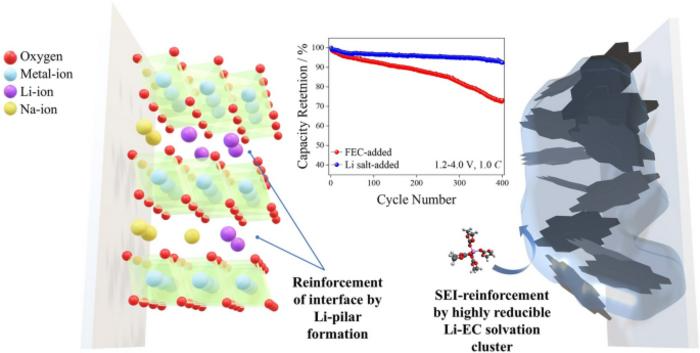
As the global demand for sustainable energy storage surges, sodium-ion batteries (SIBs) have emerged as a promising alternative to lithium-ion technology. Sodium is abundant, less expensive, and geopolitically more secure than lithium. Yet, SIBs face persistent challenges such as poor cycle stability and rapid capacity degradation—issues that have kept them from commercial competitiveness.
In a pioneering study published in Nano-Micro Letters, researchers from the Korea Electronics Technology Institute (KETI) and Kangwon National University have found a breakthrough. Their work demonstrates that by integrating lithium hexafluorophosphate (LiPF6) into the electrolyte of sodium-ion batteries, it is possible to significantly enhance interfacial stability and extend battery life.
The Science Behind Lithium-Infused Electrolytes
The core problem with current SIBs lies in the formation of a weak and unstable solid electrolyte interphase (SEI), especially on the hard carbon anode. Additionally, O3-type layered cathodes often suffer from structural collapse and oxygen evolution, further degrading battery performance.
The addition of a small amount of LiPF6 addresses these issues through several synergistic effects:
- Stronger SEI Layer: Lithium ions form a more robust SEI that reduces electron and sodium leakage while preventing solvent breakdown.
- Stabilized Cathode Surface: Lithium acts as a “pillar” in the O3-type layered cathode, minimizing structural degradation and oxygen release.
- Modified Solvation Dynamics: The lithium-solvated clusters formed in the electrolyte have higher reduction potentials, helping generate a protective SEI.
Performance Gains Backed by Rigorous Testing
High-resolution TEM and XPS characterization revealed stable electrode surfaces post-cycling. Notably, batteries containing LiPF6 maintained 92.7% capacity retention after 400 cycles—a marked improvement over conventional sodium-ion setups, which typically retain only about 80%.
Additionally, differential electrochemical mass spectrometry (DEMS) showed significantly reduced gas evolution, particularly CO2, from the cathode surface. This confirms a reduction in oxygen loss and electrolyte degradation, critical for long-term performance.
Implications for Scalable, Affordable Energy Storage
These findings open the door to cost-effective and high-performance sodium-ion batteries that could rival or even complement lithium-ion technology in the near future. With lithium salt additives requiring only trace amounts, scalability remains practical and economically viable.
According to the study, future research may focus on exploring other electrolyte additives, investigating advanced interfacial mechanisms, and optimizing formulations for industrial production.
Research Citation
Full article available at: AZoM News Article
Journal Reference: Byun, J., et al. (2025). Transformative Effect of Li Salt for Proactively Mitigating Interfacial Side Reactions in Sodium-Ion Batteries. Nano-Micro Letters. https://doi.org/10.1007/s40820-025-01742-z
A Step Toward Energy Sovereignty
This work contributes meaningfully to the energy transition by enhancing the practicality of SIBs, potentially reducing our dependency on rare and geopolitically sensitive lithium supplies. The future of large-scale energy storage could be closer than we think—thanks to a small but powerful lithium additive.
Follow Quantum Server Networks for the latest in advanced battery technologies, quantum materials, and AI-powered materials simulations.
Sponsored by PWmat (Lonxun Quantum) – a leading developer of GPU-accelerated materials simulation software for cutting-edge quantum, energy, and semiconductor research. Learn more about our solutions at: https://www.pwmat.com/en
📘 Download our latest company brochure to explore our software features, capabilities, and success stories: PWmat PDF Brochure

📞 Phone: +86 400-618-6006
📧 Email: support@pwmat.com


Comments
Post a Comment