MIT's LMNT Lab: Accelerating Materials Innovation for the Fusion Energy Revolution
Posted on Quantum Server Networks | June 10, 2025
Fusion energy has long been considered the holy grail of clean, abundant, and sustainable power. Now, a bold new initiative at MIT is bringing this dream closer to reality—not by refining plasma physics, but by tackling one of fusion’s biggest bottlenecks: materials. The Schmidt Laboratory for Materials in Nuclear Technologies (LMNT) is a new facility at MIT’s Plasma Science and Fusion Center (PSFC) designed to rapidly discover and evaluate the materials that will make commercial fusion energy possible.
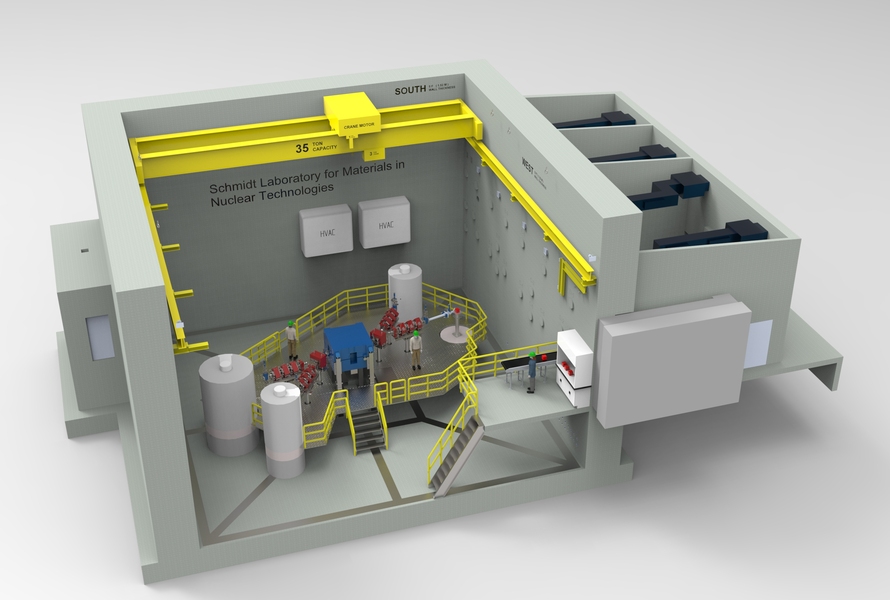
Backed by a philanthropic consortium led by Eric and Wendy Schmidt, and built inside the repurposed vault of the iconic Alcator C-Mod tokamak, LMNT is a next-generation testing ground where time-tested infrastructure meets cutting-edge science. The full announcement and project overview is detailed at MIT News.
Why Materials Matter for Fusion
While $8 billion in private capital has already been invested in fusion startups worldwide, one critical question remains: What materials can withstand 150-million-degree plasma and intense neutron bombardment over long durations? The answer could determine how quickly fusion transitions from experimental concept to a mainstay of global energy systems.
According to Professor Zachary Hartwig, head of LMNT, "We need technologies today that will rapidly develop and test materials to support the commercialization of fusion energy." LMNT’s mission is to go beyond basic discovery and move directly toward qualifying real-world materials for fusion reactors.
The Cyclotron Advantage
Traditional material testing methods rely on nuclear fission reactors, which are slow, costly, and don’t accurately replicate fusion conditions. LMNT will instead use proton beams generated by a cost-effective, off-the-shelf cyclotron—a type of particle accelerator commonly used in healthcare. Proton beams can simulate the damage caused by fusion neutrons more effectively, penetrate deeper into materials, and deliver test results in days instead of years.
The cyclotron will be surrounded by four experimental bays and is expected to be installed by the end of 2025, with full-scale testing underway in early 2026. These facilities will be overseen by veterans of the Alcator projects and the PSFC's high-temperature superconducting magnet research, ensuring LMNT's swift progression from concept to operation.
Education, Industry, and Impact
LMNT is not just a facility—it’s a platform for training the next generation of fusion scientists and engineers. Located on MIT’s campus, it offers students hands-on experience in a real-world materials development pipeline. Nuclear science and engineering students will help operate and design experiments, gaining direct exposure to technologies shaping the future of energy.
The lab also represents a new model for public-private partnerships in fusion research. "This is the start of a new era of fusion research at MIT," says PSFC Director Nuno Loureiro. "It’s ambitious, bold, and critical—and that’s exactly why we do it."
Fusion’s Fast Track
MIT’s new approach is grounded in urgency. Climate change won’t wait. By leveraging repurposed facilities, off-the-shelf hardware, and targeted philanthropy, LMNT is moving at a speed rarely seen in scientific infrastructure projects. As Professor Elsa Olivetti puts it, "This initiative helps us act now and move fast."
LMNT could be the missing link in turning fusion from a long-term aspiration into a near-term, grid-ready solution. The materials innovations born here will inform not just fusion, but also fission energy, particle physics, and next-generation nuclear applications.
Read the original article: https://news.mit.edu/2025/new-facility-accelerate-materials-solutions-fusion-energy-0609
🔍 Tags:
#FusionEnergy #MaterialsScience #LMNT #MITFusion #CleanEnergy #ProtonBeams #CyclotronTechnology #NuclearEngineering #ClimateTech #QuantumServerNetworks
Stay connected with Quantum Server Networks for the latest in energy innovation, materials breakthroughs, and next-gen scientific research.


Comments
Post a Comment