Living Concrete: Scientists Develop Self-Healing Building Material Using Synthetic Lichen
Published on Quantum Server Networks • June 2025 • Smart Materials, Biomimicry & Sustainable Infrastructure
Concrete is one of the most widely used materials on Earth, foundational to everything from highways and bridges to skyscrapers and homes. But it’s not without flaws—chief among them is its brittleness and tendency to crack under tensile stress. Now, in a major advancement blending synthetic biology and materials science, researchers have developed a revolutionary kind of self-healing concrete—and it's alive.
Source: ScienceAlert – Living Concrete That Heals Its Own Cracks
The Problem: Concrete’s Inherent Weakness
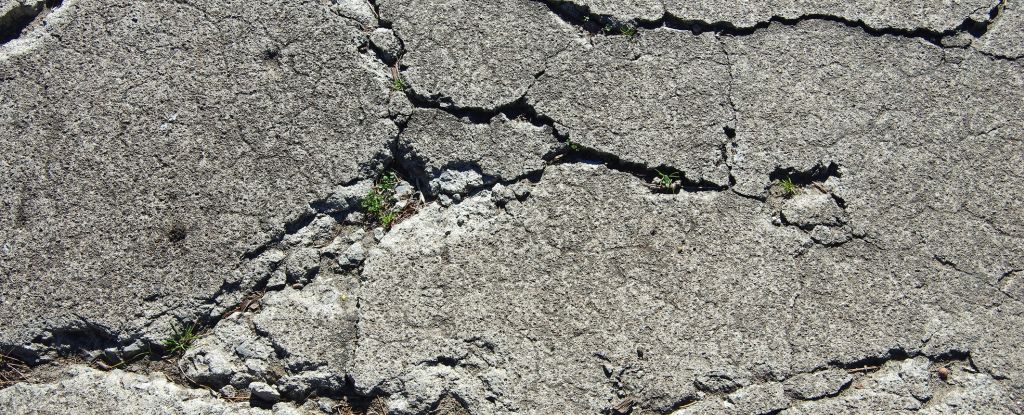
Although concrete boasts excellent compressive strength, it has relatively low tensile strength. This makes it prone to cracking under shifting loads or environmental stress. Once cracks form, they allow water, salts, and other corrosive agents to infiltrate and degrade internal steel reinforcements—shortening the structure’s lifespan and increasing maintenance costs.
To address this challenge, scientists have long sought to develop self-healing concrete. Past approaches have focused on embedding bacteria that precipitate calcium carbonate when exposed to water, but these systems have limitations—they require external nutrient sources to activate the microbes and often need manual intervention.
The Breakthrough: A Self-Sustaining Living System
A research team led by mechanical engineer Congrui Grace Jin at Texas A&M University has pushed the concept much further by engineering a synthetic lichen system. Their bioengineered lichen combines cyanobacteria, which fix atmospheric nitrogen and carbon dioxide, with a filamentous fungus that attracts calcium ions and facilitates the precipitation of calcium carbonate—the same material found in coral and eggshells.
Unlike previous bacterial approaches, this lichen-based material does not require exogenous feeding. The photosynthetic cyanobacteria harvest sunlight and atmospheric gases, while the fungi generate the mineral glue needed to seal cracks from within. It’s a stable symbiotic system that continually operates without human intervention.
How It Works: Biomineralization in Action
In laboratory tests, the lichen successfully healed artificially induced cracks in concrete samples by forming substantial deposits of calcium carbonate along the fracture lines. This natural mineralization process not only glued the cracks shut but also prevented further propagation.
“Imagine mixing two ingredients in a recipe and getting a result that’s better than either on its own,” Jin remarked. “This effect boosted the repair capacity of concrete far beyond what previous microbial solutions could achieve.”
This work is conceptually similar to how ancient Roman concrete self-healed through chemical reactions over time, but adds the modern benefit of a living, continuously active repair mechanism.
The Future of Self-Healing Infrastructure
The implications of this work are massive. Buildings, roads, and bridges could gain the ability to self-repair minor damage autonomously, reducing maintenance costs, extending service life, and dramatically improving the sustainability of our infrastructure. The researchers are now exploring how well the living concrete performs with pre-existing cracks and in real-world environmental conditions.
This research, first authored by Nisha Rokaya of the University of Nebraska–Lincoln and published in Materials Today Communications, paves the way for a new generation of bio-enabled smart construction materials that combine the resilience of inorganic structures with the adaptability of living systems.
“The results demonstrated the potential of creating a stable phototrophic-heterotrophic system for self-sustained concrete repair,” the authors conclude. Their approach eliminates the need for artificial feeding and opens up opportunities to integrate this system into large-scale civil engineering projects.
Next Steps and Broader Implications
Going forward, researchers aim to test the material’s resilience in outdoor environments and assess its long-term viability. If successful, we may soon see bridges, buildings, and highways that don't just stand the test of time—but actively heal themselves along the way.
Published findings: “A Synthetic Lichen for Self-Healing Concrete,” in Materials Today Communications (2025).
#SelfHealingConcrete #LivingMaterials #BioInspiredEngineering #SmartInfrastructure #SustainableConstruction #SyntheticLichen #ConcreteTechnology #Biomimicry #MaterialsScience #QuantumServerNetworks


Comments
Post a Comment