Carbon Nanotube Breakthrough: New Open Database Accelerates Design of Super-Strong, Lightweight Materials
Published on Quantum Server Networks • June 2025 • Carbon Nanotubes, Computational Materials, and AI-Powered Design
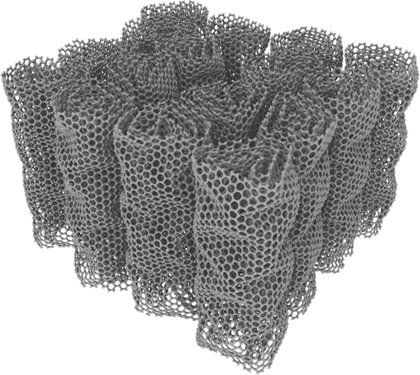
Carbon nanotubes (CNTs) have long been hailed as “wonder materials” for their exceptional strength, flexibility, and lightweight nature. But despite decades of research, predicting their real-world behavior—especially under stress—has remained a time-consuming challenge. Now, a research team led by Professor Hendrik Heinz at the University of Colorado Boulder has delivered a transformative leap forward: an open-access database containing over 2,000 stress-strain curves and failure profiles for carbon nanotube structures.
Source: University of Colorado Boulder – Materials Science & Engineering News
A Game-Changer for Carbon Nanotube Research
This publicly available repository is the first of its kind to integrate mechanical performance data directly with 3D structures of CNTs. Prior databases offered geometric models but lacked any useful information about tensile strength, elasticity, or failure conditions—key data for engineers designing next-generation composites for aerospace, automotive, or electronics applications.
“This is the first database that includes both structures and the mechanical properties,” said Heinz, professor of chemical and biological engineering and a core member of CU Boulder's materials science and engineering program. “You’ll have the results in one hour instead of spending a year running experiments.”
How It Works: AI + Materials Modeling
Heinz’s team collaborated with researchers from institutions including the Air Force Research Laboratory, Johns Hopkins University, Texas A&M, and UC San Diego. Using advanced computational modeling and AI-assisted simulations, the group was able to systematically generate high-precision predictions of CNT mechanical behavior across diverse morphologies, including tubes with defects, various diameters, chirality patterns, and bundled structures.
This effort solves one of materials science’s most persistent bottlenecks: data sparsity. In experimental settings, capturing full stress-strain curves for novel nanoscale materials is prohibitively slow and expensive. The new database turns that paradigm on its head, making it possible for researchers to virtually test new carbon-based materials in a fraction of the time.
Why Stress-Strain Curves Matter
Stress-strain curves are essential in understanding how a material behaves under tension, compression, or shear. For carbon nanotubes—which are 100 times stronger than steel at a fraction of the weight—these curves help predict mechanical limits, deformation mechanisms, and failure thresholds. This knowledge is crucial for safely integrating CNTs into structural applications like aircraft wings, battery casings, or lightweight armor composites.
The database enables simulation-driven design of CNT-enhanced materials. Researchers can now digitally “tune” nanotube properties and simulate their effect within polymer matrices or metal composites—without expensive prototyping cycles.
Data-Driven Design for the Next Generation of Materials
“This is a problem where data science was really able to help,” Heinz noted. “Materials science usually has sparse data. This model changes that.” The database makes it easy to digitally test how altering CNT morphology—such as introducing twists or junctions—affects overall material strength. It also facilitates multiscale modeling where nanoscale predictions feed directly into macro-level simulations.
This advance emerged from the NSF-funded initiative “Harnessing the Data Revolution,” reflecting a broader trend in materials informatics where AI and big data converge with experimental science to accelerate discovery.
Who Benefits: From Research Labs to Aerospace Industries
The implications of this work are vast. Not only does it serve academia, but also benefits industries focused on lightweight structural design, defense applications, flexible electronics, and energy systems. With carbon-based materials poised to play a central role in sustainable manufacturing, the availability of this database removes one of the most significant barriers to commercialization: material property prediction at scale.
Researchers, engineers, and developers can access the database via figShare and GitHub, making it a living resource for collaborative innovation.
Contributors to the work include Jordan Winetrout (CU Boulder), Yanxun Xu (Johns Hopkins), Vinu Unnikrishnan and Landon Gaber (Texas A&M), Yusu Wang, Zilu Li, and Qi Zhao (UCSD), and Vikas Varshney (Air Force Research Laboratory).
#CarbonNanotubes #MaterialsScience #StressStrainCurves #NanoMaterials #AIinMaterials #SuperStrongMaterials #LightweightComposites #OpenScience #NSFDataRevolution #QuantumServerNetworks


Comments
Post a Comment