Superconducting Leap: Ultrafast Magnetic Field Control with Light
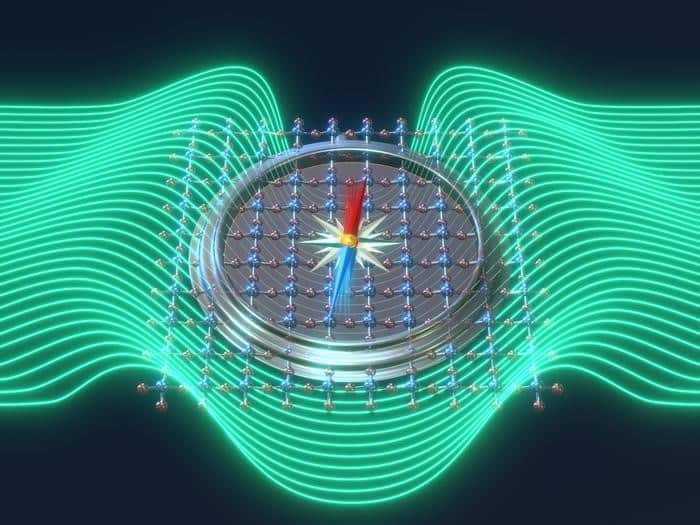
In a stunning leap for condensed matter physics and materials engineering, researchers from the Max Planck Institute for the Structure and Dynamics of Matter in Hamburg have developed a method to induce ultrafast, intense magnetic field changes—dubbed magnetic steps—through superconducting materials using light. The discovery could redefine how we manipulate magnetic properties on the fastest timescales ever observed.
The Science Behind Magnetic Steps
Magnetic steps are sharp changes in magnetic fields that rise within just picoseconds—one trillionth of a second. These rapid changes are vital for probing the non-equilibrium dynamics of magnetic materials, enabling research at the frontier of ultrafast magnetism and quantum phase transitions.
Previous attempts to generate these effects used antennas, microcoils, or polarized light—often limited in flexibility. The Hamburg team took a radically different route: they employed ultrashort laser pulses to temporarily disrupt superconducting currents in a disc of yttrium barium copper oxide (YBCO). This “quenching” of supercurrents triggered sudden magnetic shifts near the material’s surface.
Seeing the Invisible: Measuring Magnetic Shifts in Real-Time
To measure this phenomenon, scientists placed a gallium phosphide crystal near the superconductor. This material exhibits a rapid Faraday effect, changing the polarization of light in response to magnetic variations—detectable in less than a picosecond. Using synchronized “pump” and “probe” laser pulses, researchers precisely timed the rise of the magnetic step, confirming its broadband frequency range from gigahertz to terahertz.
From Lab to Application
While the induced magnetic steps aren't yet strong enough to switch magnetic states in real-world devices, their interaction with ferrimagnets (which have opposing yet net magnetization) already shows promise. By placing a ferrimagnet above the YBCO disc, the magnetic step visibly rotated its magnetization—a potential prelude to future ultrafast magnetic switching for data storage, memory, or logic devices.
The Future is Fast and Magnetic
Lead scientist Andrea Cavalleri envisions “a universal, ultrafast magnetic switch” that could toggle any material between magnetic phases. Such control could usher in new technologies in spintronics, phase-change memory, and quantum computing.
This research was originally published in Nature Photonics and covered in detail by Physics World. You can read the full article here.


Comments
Post a Comment